
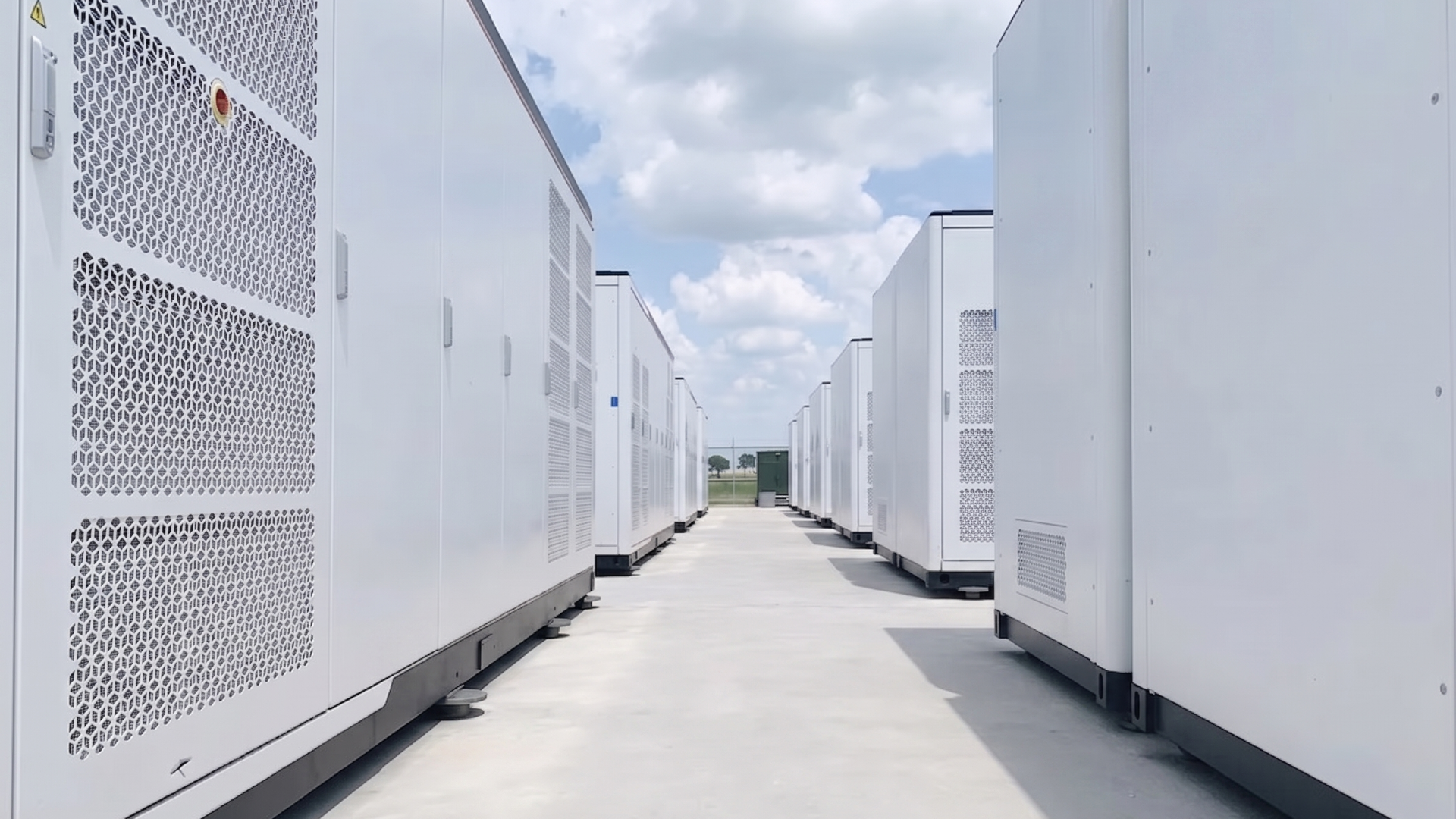
For most of the past decade, commercial battery storage in Australia was a difficult business case. Lithium pricing was high, software was immature, and most installations were sized to do one job: shift solar across the day. That's changed. Battery storage in 2026 is one of the most commercially compelling investments available to Australian businesses, but only if it's designed and deployed as more than a passive container for surplus solar. The question isn't whether to install commercial battery storage. It's how to make the battery a strategic asset rather than expensive backup. The case for battery storage has shifted Three market dynamics have transformed the economics of commercial battery energy storage systems (BESS) for Australian businesses: First, peak demand charges have become a dominant cost line for many commercial and industrial sites. A single 15-minute interval of high coincident load can set the demand charge for the entire month. Batteries that can discharge against those peaks deliver immediate, measurable cost reduction. Second, time-of-use and wholesale-passthrough tariffs have created real arbitrage opportunities. The spread between cheap midday energy and expensive peak-period energy is wider than ever, and a well-dispatched battery captures that spread on every cycle. Third, the National Electricity Market itself has become more volatile. Wholesale spot prices regularly spike during evening peak periods and grid stress events. The NEM's Market Price Cap rises from $20,300/MWh to $23,200/MWh on 1 July 2026, the highest in the world. Batteries that can dispatch into those events generate revenue, not just savings. What a battery actually does in a commercial site A commercial battery energy storage system is, at its simplest, a container for electrons that can charge and discharge on command. The commercial value comes from when and why it charges and discharges. Five distinct functions sit on top of the same hardware: 1. Solar self-consumption Storing surplus midday solar generation for use later in the day, reducing grid imports during expensive peak windows. 2. Peak demand reduction Discharging during high-demand intervals to flatten the site's peak demand reading, reducing the demand charge component of network costs. 3. Time-of-use arbitrage Charging from low-cost off-peak grid energy and discharging during high-cost peak periods, capturing the tariff spread. 4. Wholesale market participation For sites with wholesale exposure or via aggregator arrangements, dispatching during NEM spot price events that can reach the Market Price Cap. 5. FCAS revenue Providing frequency control ancillary services to the grid, a continuous revenue stream that runs alongside all of the above. A battery that only performs function 1 is a glorified solar accessory. A battery performing all five becomes one of the highest-yielding pieces of infrastructure on the site. The control problem The hardware required to perform all five functions is broadly the same. What separates a battery that captures one value stream from a battery that captures five is the intelligence controlling it. The dispatch logic for solar self-consumption is simple. The dispatch logic for capturing wholesale arbitrage while preserving capacity for peak demand reduction, while maintaining FCAS-ready state of charge, while responding to tariff changes in real time, is not. It requires: Forecasting of site load, solar generation, weather conditions and wholesale pricing Optimisation across multiple, sometimes competing, value streams Real-time dispatch logic measured in seconds, not hours Integration with metering, tariffs, and market signals Ongoing tuning as conditions evolve This is where most commercial battery installations fall short. The hardware is capable. The control system is not. The result is a battery that runs at 30 to 40 percent of its potential commercial value, sitting idle when it should be earning, or discharging into cheap windows when it should be holding capacity for expensive ones. Sizing a battery: it's not about how much you consume The most common mistake in commercial battery sizing is using site annual consumption as the starting point. A 2GWh-per-year facility doesn't need a 2GWh battery. It needs a battery sized to the specific value streams the system will capture. The right sizing methodology starts with: Peak demand profile - what's the highest 15- or 30-minute demand interval, and how much of it could a battery reduce? Solar generation profile - how much surplus is being exported below cost, and over how many hours? Tariff structure - what's the arbitrage opportunity per kWh between off-peak and peak windows? Wholesale market access - is the site or aggregator positioned to capture spot price events? FCAS-eligible capacity - what minimum reserve is required for ancillary services participation? The right battery is rarely the largest one a site can fit. It's the one sized precisely to the value streams the system can realistically capture, with headroom for the streams that will emerge over the asset's life. What good looks like in 2026 A well-designed commercial battery energy storage system in 2026 typically: Operates as part of an integrated system that includes solar generation and demand response, not as a standalone product Captures multiple value streams simultaneously - defensive (cost reduction) and offensive (revenue creation) Is sized to the site's actual value opportunity, not to its annual consumption Is controlled by software that forecasts, optimises and dispatches against real-time conditions Is backed by performance accountability that extends beyond equipment warranty Pays back faster than the panel-only solar system it complements Where Vitalic fits Vitalic Energy supplies and integrates commercial battery energy storage systems as part of integrated Smart Energy Ecosystems, combining generation, storage, demand response and intelligent control under unified commercial accountability. We work with Sungrow as a preferred supplier for proven, large-scale commercial battery storage, and Sigenergy for modular battery architectures suited to sites planning future expansion, EV charging or staged investment. Every system is engineered around your site's specific value profile. The result is a battery that doesn't just store kWh, it actively earns its place on your balance sheet. Explore our approach to commercial battery energy storage, or book a battery assessment to understand what storage could deliver for your site.
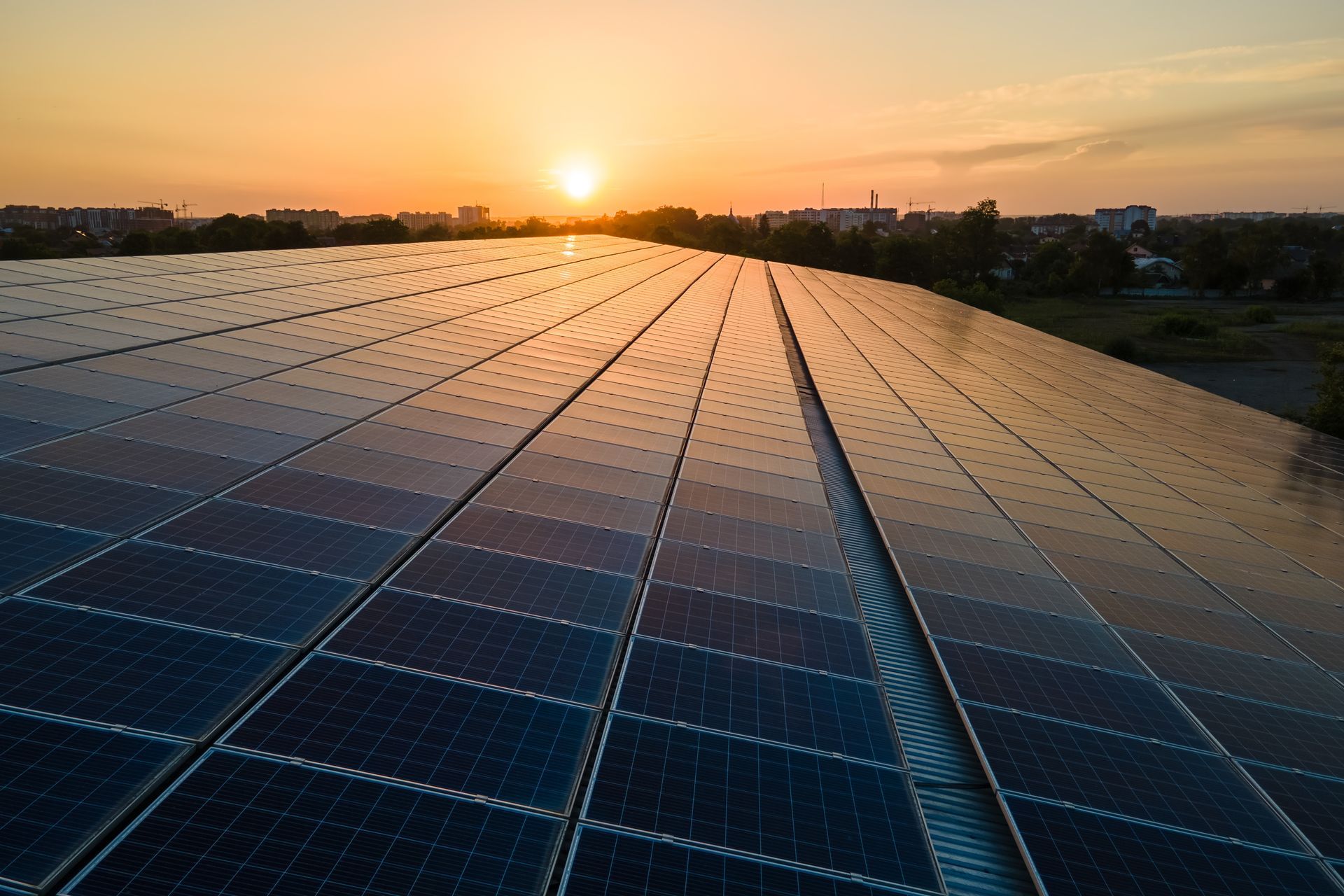
Australian businesses have invested billions in commercial solar over the past decade. For many, the result has been disappointing. Bills have come down, but not as far as projected. Returns have arrived, but slower. And as electricity prices rise again into 2026, the question is harder to ignore: is a standard commercial solar installation still enough? For most Australian businesses, the answer is no, not because solar has failed, but because the systems being installed are addressing only part of the opportunity. The real value of commercial solar is no longer in the panels alone. It's in what those panels connect to. The state of commercial solar in Australia Australia has more commercial solar capacity per business than almost any country in the world. The Clean Energy Council reports steady year-on-year growth in commercial and industrial installations, with rooftop projects of 30kW to 5MW becoming standard for warehouses, manufacturing sites, retail centres and processing facilities. But while installation volumes have grown, the value being captured per system has not kept pace. Three structural shifts have changed the economics: Feed-in tariffs have collapsed. Exporting surplus solar to the grid now returns a fraction of what it did five years ago. Time-of-use tariffs have spread. Businesses on flat-rate plans are being moved onto structures where energy costs vary by the half-hour. Peak demand charges have intensified. A single high-demand interval can set the demand charge for the entire month. A panel-only solar system was designed for a market that no longer exists. To deliver returns that match the original business case, modern commercial solar needs to do more than generate electricity. Why standalone solar caps out at 30–60% offset A well-designed commercial solar installation typically offsets 30–60% of a site's energy consumption. The reason is structural, not technical. Solar generates during daylight. Most commercial sites consume energy across longer hours, often peaking late afternoon and early evening as production ramps, HVAC loads climb, and pre-evening operations intensify. Without storage to shift that midday surplus into the evening, the gap remains. Without demand management to flatten the spikes, peak charges remain. Without intelligent control to respond to wholesale market pricing, opportunities to monetise flexible loads pass by uncaptured. The panels are doing their job. The system around them is not. How integrated systems change the equation A Smart Energy Ecosystem treats commercial solar as the foundation of a larger value stack. Generation is paired with battery storage to shift energy across time. Storage is coordinated with demand response to manage peak charges. The whole system is orchestrated by an intelligent control layer that responds to tariffs, network conditions and wholesale market signals in real time. The result is two-sided value: Defensive value - reduce cost, manage risk On-site solar generation offsets grid imports during daylight. Battery dispatch shifts stored solar into peak tariff windows. Demand response curtails non-essential loads during expensive intervals. Operational resilience and load prioritisation hold critical systems during grid stress. Offensive value - create new revenue streams Feed-in tariff revenue and large-scale generation certificates (LGCs) where eligible. Battery wholesale spot market arbitrage - buying low, dispatching during price spikes. Frequency control ancillary services (FCAS) revenue. Wholesale demand response market participation. A commercial site that previously achieved 40% energy offset can move toward 90%+ when these layers are added and start generating revenue from infrastructure that was previously only ever an expense. What this looks like for an Australian commercial site Consider a typical 1MW rooftop solar installation on a manufacturing or distribution facility. As a standalone system, it would offset a meaningful share of daytime consumption and return a payback period of 3 to 5 years on a conservative business case. Add 1MWh of battery storage and 500kW of flexible load under demand response control, and the same site can: Capture peak demand charge savings that often exceed the value of the original solar offset. Generate front-of-meter revenue through wholesale market participation and FCAS dispatch. Reduce exposure to wholesale price volatility - a meaningful risk as Australia's National Electricity Market price cap rises again from 1 July 2026. Improve operational resilience during outages or grid stress events. The total annual value created by the integrated system is typically several times that of the solar component alone. Payback compresses materially, and critically, the system continues delivering value across its full 25-year design life, rather than degrading in commercial relevance as tariff structures evolve. How to evaluate commercial solar in 2026 If you're considering commercial solar for an Australian business, the questions to ask have changed. Panel brand, inverter quality and installer credentials still matter, but they're table stakes. The questions that determine whether your investment performs over its full life are different: Is the system designed around your site's actual consumption profile, or sized to maximise install revenue? Is the system architecture battery-ready and control-ready for future expansion? Will the system participate in wholesale energy markets, or only offset behind-the-meter consumption? Who is accountable for performance over the asset's lifetime, the installer, or just the equipment manufacturer's warranty? Does the commercial structure align with your energy independence, or with the installer's pipeline? The right answers don't always cost more upfront. They typically deliver three to four times the lifetime value of a comparable panel-only installation, with payback periods that compress rather than extend as the market evolves. Where Vitalic fits Vitalic Energy pioneers integrated Smart Energy Ecosystems for Australian commercial and industrial enterprise. Solar PV generation is the foundation of our value stack, engineered to perform as part of an interconnected energy system that includes battery storage, demand response management and intelligent control. We design every system around your site's operational profile, your tariff exposure and your long-term commercial objectives. The result is energy infrastructure that doesn't just reduce cost. It actively creates value across the asset's full life. Explore our approach to commercial solar PV generation, or book an energy strategy assessment to understand what an integrated Smart Energy Ecosystem could deliver for your site.